
.svg)
How Arts & Literature Have Helped Restore what war
Art played a vital role in bridging the divide between those who have been displaced and who are survivors of war, violence, and gender-based harm and the host communities in places that have been spared the conflict.


/ answered

‘O Death, all the arts have defeated you’ Mahmoud Darwish
Anthropologists have defined culture as the sum of human activity: eating, finances, work, politics and even criminality. Arts and literature express this culture, or elements of it, and are one of the strategies of survival to enhance beauty and defy ugliness. These artforms we carry within us, where the rhythm of human footsteps becomes music and the world around us is awash with colour.
Wars have devastated life and are perhaps the cruellest and most ugly act that has been waged against humanity and beauty. Yet somehow, life and culture always find a way to carry on and to shine through. One way in which communities stay together and keep the hope alive is by resisting and by working to counter the evils let loose by the flames of war namely the spread of hate speech and the vilification of those who are different and treating them as enemies.
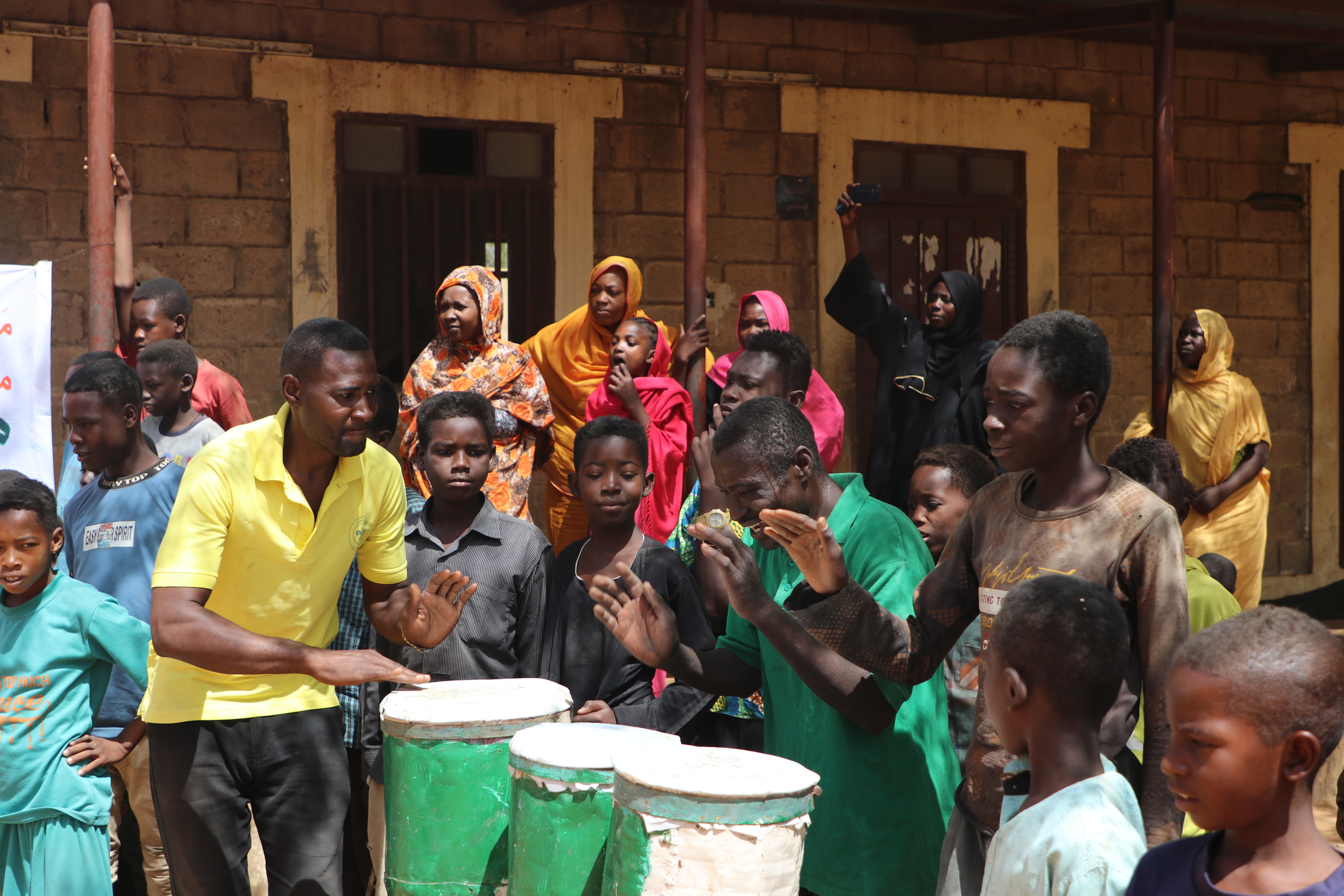
Art played a vital role in bridging the divide between those who have been displaced and who are survivors of war, violence, and gender-based harm and the host communities in places that have been spared the conflict. Cultural groups organized gatherings in shelters—by day and by night—where displaced people danced, sang, and revived the memory of their homes and neighbourhoods. Their culture and heritage were vividly represented, affirming their identity and creating bonds of affection. These moments profoundly reshaped the collective psyche, nurturing a spirit of kinship between the displaced and their hosts, who became a genuine source of support and solidarity. Several community initiatives, such as Art is the Answer, sought to make shelters, housing displaced people, more humane, safe, and welcoming. They aimed to recreate the warmth and familiarity of home and old neighbourhoods.
Theatre and interactive performances became spaces to discuss and resolve problems as a means of entertainment but also as a way to resist oppression, war and the sounds of bombs and drones. They also promoted environmental awareness. Schools were transformed, almost miraculously, into homes were familiar gathering was revived and celebrations and grooms’ henna parties were organised.
‘O mother, the rites of war have taught me how to love,
To sing my songs
From the belly of the pit,
To let my branches bloom
Even as the shelling echoes nearby.
We live.
We love.’
In the shelters, through mental and social support groups led by the Psychological Trauma Recovery Organization—in collaboration with universities, artists and individuals—art was used as a medium for children and youth to release their frustrations and to assess psychological needs through drawing and colouring. Brush and paint revealed what children and adolescents harmful scenes remained etched on their subconscious. Many psychological disorders and behaviours emerged such as bedwetting, mood disorders, anxiety and fear, depression, and a tendency towards isolation.
All of these were predictable symptoms resulting from the profound loss of family and the absence of familiar rhythms of normal life and the spectres of death they had encountered. Music and the arts were used as therapeutic mediums to help treat these effects and to rehabilitate the children, mothers and youth who had lived through it all. The psychosocial support providers themselves were in turn cared for by the displaced thus creating a shared experience that made a tangible difference to the lives of everyone in the shelters. This compassion restored their faith in themselves and in the possibilities that lay ahead.
Youth groups working in shelters embraced interactive theatre, where audiences participate and are able to convey their own messages of peace and to use art as a weapon of resistance and survival. Among these groups is the Mobile Workshop Collective led by director Rabie Youssef who created Al-Mishwar ‘The Journey’, a musical performance with a deep dramatic philosophy. It is a journey through Sudan where every person has their own opinion: how can we go ahead, where to and why? This heartfelt performance is able to dissect Sudan’s current situation by exploring how difference is a potential source of beauty and cohesion, like a rainbow, or of fragmentation and rupture, as is happening now. The play exposes the problems in order to deal with them and to ultimately show that only culture and the arts are what survive and can heal and make a difference.
Speaking about Al-Mishwar, its author and director Mr. Rabie Youssef Hassan explains
“The performance represents all of us Sudanese—women and men of different ages, features, languages, and regions tasked with completing a shared journey where no one can be left behind. Everyone’s mission is bound to another’s and so, they must overcome obstructions along the way—especially those of racism, discrimination, hate speech, and violence against women. People argue about which path to take for the journey? Who is fit to lead? Should women walk alongside them? Among them is a woman who is over ten months pregnant. She claims her unborn child has told her that it refuses to be born until they dismantle the barricades they themselves have built. Her labour pains begin only after they tackle and remove the final barrier. Only then does she give birth to her daughter.”
Through his directorial vision, Rabie emphasized Sudan’s cultural and ethnic diversity—showing how it can serve both as a reason for conflict and division but also as a source of strength and distinctiveness. Unity, he suggests, becomes possible when the diverse elements of Sudan’s identity acknowledge their common challenges and shared destiny.
Many cultural groups and civil society bodies who have become scattered in exile, found creative ways to persist and to contribute—reviving the role of art and culture in crafting solutions and alternatives for survival, in stitching together what war had torn apart. The war ripped the nation’s clothing and artists and intellectuals joined forces to mend it.
This is how life carries on and how culture, art and literature find the cracks and their rays become beacons of light, resistance and endurance.
This is how the arts defeat death.
References
1. Darwish, M. (2000). Jidariyya [Mural]. Beirut: Riad El-Rayyes Books. [Extract cited in text].
2. Khalid, I.A. (n.d.). Al-Hisar [The Siege]. Unpublished manuscript. [Extract cited in text].
3. Khalid, I.A. (n.d.). Qamees Yusuf [The Shirt of Yusuf]. Unpublished manuscript. [Extract cited in text].
‘O Death, all the arts have defeated you’ Mahmoud Darwish
Anthropologists have defined culture as the sum of human activity: eating, finances, work, politics and even criminality. Arts and literature express this culture, or elements of it, and are one of the strategies of survival to enhance beauty and defy ugliness. These artforms we carry within us, where the rhythm of human footsteps becomes music and the world around us is awash with colour.
Wars have devastated life and are perhaps the cruellest and most ugly act that has been waged against humanity and beauty. Yet somehow, life and culture always find a way to carry on and to shine through. One way in which communities stay together and keep the hope alive is by resisting and by working to counter the evils let loose by the flames of war namely the spread of hate speech and the vilification of those who are different and treating them as enemies.
Art played a vital role in bridging the divide between those who have been displaced and who are survivors of war, violence, and gender-based harm and the host communities in places that have been spared the conflict. Cultural groups organized gatherings in shelters—by day and by night—where displaced people danced, sang, and revived the memory of their homes and neighbourhoods. Their culture and heritage were vividly represented, affirming their identity and creating bonds of affection. These moments profoundly reshaped the collective psyche, nurturing a spirit of kinship between the displaced and their hosts, who became a genuine source of support and solidarity. Several community initiatives, such as Art is the Answer, sought to make shelters, housing displaced people, more humane, safe, and welcoming. They aimed to recreate the warmth and familiarity of home and old neighbourhoods.
Theatre and interactive performances became spaces to discuss and resolve problems as a means of entertainment but also as a way to resist oppression, war and the sounds of bombs and drones. They also promoted environmental awareness. Schools were transformed, almost miraculously, into homes were familiar gathering was revived and celebrations and grooms’ henna parties were organised.
‘O mother, the rites of war have taught me how to love,
To sing my songs
From the belly of the pit,
To let my branches bloom
Even as the shelling echoes nearby.
We live.
We love.’
In the shelters, through mental and social support groups led by the Psychological Trauma Recovery Organization—in collaboration with universities, artists and individuals—art was used as a medium for children and youth to release their frustrations and to assess psychological needs through drawing and colouring. Brush and paint revealed what children and adolescents harmful scenes remained etched on their subconscious. Many psychological disorders and behaviours emerged such as bedwetting, mood disorders, anxiety and fear, depression, and a tendency towards isolation.
All of these were predictable symptoms resulting from the profound loss of family and the absence of familiar rhythms of normal life and the spectres of death they had encountered. Music and the arts were used as therapeutic mediums to help treat these effects and to rehabilitate the children, mothers and youth who had lived through it all. The psychosocial support providers themselves were in turn cared for by the displaced thus creating a shared experience that made a tangible difference to the lives of everyone in the shelters. This compassion restored their faith in themselves and in the possibilities that lay ahead.
Youth groups working in shelters embraced interactive theatre, where audiences participate and are able to convey their own messages of peace and to use art as a weapon of resistance and survival. Among these groups is the Mobile Workshop Collective led by director Rabie Youssef who created Al-Mishwar ‘The Journey’, a musical performance with a deep dramatic philosophy. It is a journey through Sudan where every person has their own opinion: how can we go ahead, where to and why? This heartfelt performance is able to dissect Sudan’s current situation by exploring how difference is a potential source of beauty and cohesion, like a rainbow, or of fragmentation and rupture, as is happening now. The play exposes the problems in order to deal with them and to ultimately show that only culture and the arts are what survive and can heal and make a difference.
Speaking about Al-Mishwar, its author and director Mr. Rabie Youssef Hassan explains
“The performance represents all of us Sudanese—women and men of different ages, features, languages, and regions tasked with completing a shared journey where no one can be left behind. Everyone’s mission is bound to another’s and so, they must overcome obstructions along the way—especially those of racism, discrimination, hate speech, and violence against women. People argue about which path to take for the journey? Who is fit to lead? Should women walk alongside them? Among them is a woman who is over ten months pregnant. She claims her unborn child has told her that it refuses to be born until they dismantle the barricades they themselves have built. Her labour pains begin only after they tackle and remove the final barrier. Only then does she give birth to her daughter.”
Through his directorial vision, Rabie emphasized Sudan’s cultural and ethnic diversity—showing how it can serve both as a reason for conflict and division but also as a source of strength and distinctiveness. Unity, he suggests, becomes possible when the diverse elements of Sudan’s identity acknowledge their common challenges and shared destiny.
Many cultural groups and civil society bodies who have become scattered in exile, found creative ways to persist and to contribute—reviving the role of art and culture in crafting solutions and alternatives for survival, in stitching together what war had torn apart. The war ripped the nation’s clothing and artists and intellectuals joined forces to mend it.
This is how life carries on and how culture, art and literature find the cracks and their rays become beacons of light, resistance and endurance.
This is how the arts defeat death.
References
1. Darwish, M. (2000). Jidariyya [Mural]. Beirut: Riad El-Rayyes Books. [Extract cited in text].
2. Khalid, I.A. (n.d.). Al-Hisar [The Siege]. Unpublished manuscript. [Extract cited in text].
3. Khalid, I.A. (n.d.). Qamees Yusuf [The Shirt of Yusuf]. Unpublished manuscript. [Extract cited in text].


