
.svg)
Adorned Bodies, Protected Souls
Marriage and childbirth in ancient Sudan were never individual experiences; they were collective ones marked by rituals that endowed them with a sacred dimension and shaped communal life. At the forefront of these rituals was the Jirtig.


/ answered

Adorned Bodies, Protected Souls: The Sudanese Jirtig as Embodied Knowledge
Marriage and childbirth in ancient Sudan were never individual experiences; they were collective ones marked by rituals that endowed them with a sacred dimension and shaped communal life. At the forefront of these rituals was the Jirtig.
The etymology of the word is uncertain. Sudanese scholars of Arabic offer different explanations including professor Abdullah al-Tayib, who suggests it may derive from the Arabic dardaq (meaning the young of humans or animals), and professor ʿAwn al-Sharif Gasim, who traces it to the word jirt, referring to ritual adornments worn during the ceremony. Regardless of its linguistic roots, the Jirtig has stood out as a symbolic rite of passage—a threshold between one social state and another. Its importance lies in its role as an imagined arena where the tensions between good and evil, protection and exposure, identity and belonging, are negotiated.
The Jirtig ceremony’s combination of unique elements such as incense, adornment, collective singing and prayers made it a celebration and a means of protection against envy, evil spirits, and misfortune. It fostered social integration and framed transformations of gendered identity.
Through its embodied performance and spiritual significance, the ritual reflected local epistemologies relating to health, fertility, and the survival and continuity of the community.
The Jirtig extended beyond superficial, merely celebratory practice, to become a symbolic and epistemic structure through which women shaped their bodies and lives within social relations. While the ritual has persisted in some communities, the pressures of modernity—along with medical and hygienic understandings of the body and health—have eroded its social function.
This article is an attempt to reclaim the Jirtig as embodied knowledge and as a site of resistance to colonial systems of regulation.
The Jirtig as a Rite of Passage
The Jirtig was associated with moments of transition in social status, such as circumcision, marriage, pregnancy, childbirth, and the postpartum period. It was a profoundly woman-centred ritual, in which the bride, or mother-to-be, was surrounded by other women who joined her in singing and in adorning, and burning incense to decorate and perfume her. It evoked a sisterhood we no longer experience today after adopting so many American cultural influences. These rituals were regarded as protection against envy and Al-ʿAyn al-Ḥāra (literally the “hot eye,” a Sudanese term describing the harmful effects of the envious gaze), but they also worked to reshape gender and social identity.
Today, the Jirtig is mainly associated with marriage (and sometimes circumcision), whereas in the past it was also performed during the seventh month of pregnancy and after childbirth.
The circumcision ritual was performed between birth and puberty, and the circumcised boy or girl were given great privilege and adorned with Jirtig decorations. The girl wore special clothes and jewellery, her eyes were rimmed with kohl, and necklaces of bloodstone beads, believed to stop bleeding and accelerate healing, were draped around her neck. A red silk ribbon was tied around her right wrist, and her palms and feet were decorated with henna—boys received similar adornment. Both boys and girls were circumcised on an angareb—the traditional bed made of wood and woven string, an icon of Sudanese households—covered with a red mat and where they lay for about a week.
The marriage Jirtig was a pivotal event, marking the transition from singlehood to married life. It was elaborate and meticulously detailed. During the ceremony, the bride and groom sat together on a decorated angareb, adorned with palm fronds. Songs played a central role in shaping the moment, as women sang the bride’s praises; her beauty, lineage, virtues, and hopes for her new life.
At the same time, her body was enveloped in incense and sprinkled with water and perfume, creating a liminal space between the material and the spiritual, believed to shield her from envy. This was not a private moment limited to the bride, but a collective ritual that revealed the solidarity of women as a community co-creating meaning and protection.
In the context of pregnancy and postpartum, the Jirtig rituals supported the woman both emotionally and physically, strengthening her connection to her body and her place within the community. The expectant mother sat on an angareb—typically placed in the middle of the courtyard and facing east. Her freshly braided hair was dusted with sandalwood powder mixed with perfume, her eyes and eyebrows lined with kohl, and her face and skin rubbed with dilka (a traditional Sudanese body scrub made from fermented flour, scented oils, and spices). She wore a necklace featuring a silver disc known as Faraj Allah and small, ugly figurines were placed around her bed to ward off envy. However, certain groups—such as the Jaʿaliyyin and the Rubatab—did not practice this particular aspect, since the details of the Jirtig varied across communities.
For example, in the regions of Sennar and Singa, there was a ritual known as “eating aṣīda”—a traditional Sudanese dish made from sorghum, similar to a stiff porridge—during which women rubbed handfuls of the staple dish onto the pregnant woman’s exposed belly. This act was believed to enhance fertility for her and for those present. The woman, adorned in ceremonial fashion, remained confined to her home for about a week, during which she avoided actions thought to cause mushāhara—a culturally specific Sudanese term referring to a range of misfortunes or complications believed to affect pregnancy.
After childbirth, the nafasa (new mother) and her child, underwent another Jirtig ritual—the postpartum Jirtig. These carefully orchestrated ceremonies affirmed the community’s collective effort to ensure the mother’s safety and fertility, like a protective cocoon woven around her, preparing both mother and child for a blessed entry into the world.
The ritual concluded with reintegration as the woman, who now enjoyed a new status, returned to the community and was formally recognised as a member with distinct rights and responsibilities. The spirit of womanhood moved through successive bodily stages: from the body of the girl to the fully initiated female body, to the married body, to the life-bearing body and finally to the maternal body. As such, the Jirtig was not merely a festive display or announcement; it was a socio-cultural act that reproduced symbolic and social order, redefining the individual’s place within the community and sustaining collective identity by affirming belonging to lineage, inherited traditions, and the integration of personal experience into the communal narrative.
Embodied Knowledge
The Jirtig emerged as a living embodiment of intergenerational knowledge—passed down orally, especially through grandmothers, across generations. They recited prayers and chanted folk songs, observed the subtle changes that mark a woman’s body, relying not on modern devices, but on lived and practised wisdom. This form of knowledge is inseparable from its cultural and social context, making Jirtig a gateway to understanding how Sudanese women generated an alternative, communal, and feminist epistemology. It is not medical knowledge in the modern sense, nor is it merely therapeutic for the body—it is social, spiritual, and aesthetic. It conveys a collective, inherited understanding of well-being, fertility, and protection.
What unfolds here is a socio-cultural system that regulates sexuality, reproduction, and family formation—shaped and sustained by social figures, predominantly women. Grandmothers, for example, functioned as cultural institutions and custodians of heritage, indispensable to Jirtig rituals through roles that no one else could assume. Similarly, the dāyāt—midwives not in the narrow biomedical sense, but as wise experts in circumcision, pregnancy, and postpartum care—stood as guardians of the female body, working in intimate relation with its reproductive functions.
Another prominent female figure was the Shaykha of the Zār cult, who presided over ceremonies in which women—and at times men—channelled forbidden desires through ritualised trance, transforming them into socially sanctioned expressions. Her healing rites addressed matters of fertility, marriage, divorce, pregnancy, childbirth, childhood, and sexual desire, and extended to broader concerns of social conduct and upbringing.
Zār rituals functioned as the spiritual counterpart to physical circumcision, restoring the female body’s integrity and strength while healing the soul from its perceived flaws. It is no coincidence that many Shaykhas of the Zār cult—or women who practised Zār—were midwives or worked in the medical field.
To these we add the mashāṭāt (women who braided hair, an essential component of Jirtig adornment), the daqāqāt al-rīḥa (perfume makers), and many others. Together, these women sustained an elaborate network of roles, forming a collective, embodied archive of feminine knowledge. Within this system, the Jirtig stood as a living expression of their unity—integrating diverse figures and practices into a cohesive whole.
Colonial Critique and the Dismantling of Ritual
With the advent of British colonial rule, traditional therapeutic and epistemic systems were dismantled in favour of a modern, bureaucratic, national medical regime—one that stripped the body of its collective and ritual dimensions. Practices such as the Jirtig were relegated to the realm of “heritage,” rather than recognised as living tradition. Rituals like the Jirtig, Zār, and female circumcision were redefined by colonial authorities and public health physicians as markers of backwardness and ignorance. The female body was thereby subjected to the discourse of medical authority, transformed into an object of surveillance, intervention, and normalization within the logic of the colonial state, which conflated health with order and control.
The rationalist approach to reproduction imposed by colonial authorities brought about a profound shift in how Sudanese women perceived their bodies. Prior to this intervention, fertility and the womb were culturally revered as sources of life. A woman’s sexuality, reproductive capacity, and physical body were deeply intertwined with her identity and community. Fertility was not merely a biological function—it was a core aspect of feminine identity, governed by symbolic rites such as circumcision, marriage, and childbirth. Its afflictions were treated through spiritual healing, most notably the Zār ritual, which allowed women a form of self-expression during which society refrained from blaming them and instead attributed their complaints to forces beyond their soul or body—such as spirits (jinn).
Here, Zār stood in opposition to Western individualism, which ascribed fixed and determinate attributes to the body and mind, treating them as distinct and separable entities. By contrast, the Sudanese concept of al-zōl (the person) was fundamentally relational: ethics, values, afflictions, and inner conflict were conceived as collective responsibilities rather than individual burdens. This relational worldview exceeded the bounds of what Western sensibilities could accommodate.
Whereas the Jirtig treated the body as a site of meaning, connection, and memory—its adornments and melodies expressing therapeutic vocabularies that linked body and spirit—the colonial order recast the body as a discrete functional machine, governed by physiological processes that could be scientifically understood and managed, entirely separated from inner selves or collective belonging. Teachings further extended to bodily routines such as clothing, and dietary instructions—even prescribing how food should be chewed. These measures were designed to mould the maternal body into an efficient, functional reproductive vessel. They imposed a regime of self-discipline and normalized a pervasive surveillance of the female body, wherein every behaviour, gesture, and habit became subject to scrutiny and correction. In this way, a new model of fertility and motherhood was institutionalised. Through this form of biopolitical education, the relationship between body, society, and state was fundamentally reconfigured.
Jirtig Today: Between Folklore and Living Resistance
Despite all these transformations, Jirtig continues to be practised in some rural and urban communities, albeit in abridged or adapted forms. At times, it serves as a marker of cultural identity and a means of affirming belonging to a shared past. Elements of Jirtig are also incorporated into social and artistic events today, attesting to the enduring power of its symbolism and its deep resonance within collective memory.
Some young women—particularly in diasporic contexts—consider Jirtig a means of affirming cultural identity and reconnecting with ancestral roots and indigenous meanings. This continuity is not without challenges, as many Jirtig practices are reinterpreted in modern contexts and risk being stripped of their deeper significance in favour of aesthetic or folkloric dimensions. Yet its very persistence as a social act underscores its ability to transcend time, serving as a site of soft, feminine resistance and the reawakening of memory.
Jirtig cannot be understood in isolation from its cultural, social, and spiritual contexts. It is a living practice that, over time, has produced knowledge, identity, and beauty. This article is not an attempt to restore the ritual in its original form or to reject modern medical science—that would contradict its core argument. If Jirtig once constituted an integral part of a holistic epistemology of the body, interwoven with social relations, then its revival in that same sense is no longer possible. The reality is that we now inhabit a different global system.
Restoring significance to this ritual does not mean recovering the past, but rather enacting resistance against attempts at erasure and the reorganisation of life according to the logic of the colonial state. In this sense, Jirtig offers a lens through which to understand how women in Sudan resisted the erasure of bodily and symbolic meaning and the trivialising of cultural experiences to preserve their embodied knowledge in the face of coercive forms of modernity.
Under the arch of Jirtig as a feminist and communal practice rich in knowledge, this article underscores the importance of integrating traditional rituals into epistemological, medical, and identity studies—not as mere customs or heritage to be preserved, but as alternative frameworks for understanding life, society, and the body. Such frameworks may include elements we can no longer fully recover or which we may even choose to reject; yet the issue at stake is not one of content, but of form.
Thinking through and working towards the recovery of a collective, participatory identity, knowledge, and set of relations challenges the colonial regime—a system that divides rather than unites separating the private sphere from the public, the self from its body, and the individual from the community. More than ever before, Jirtig affirms the importance of bringing together and making whole, in the face of a global order that continues to demonstrate its failures today.
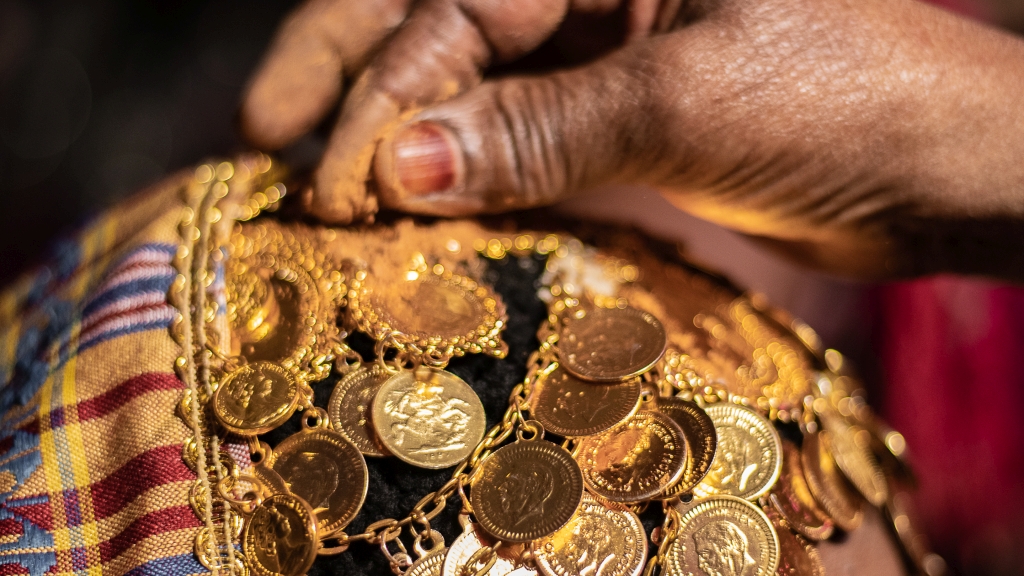
cover picture taken by: Yousif Alshikh
References
- Boddy, J. (2003) ‘Barbaric custom and colonial science: teaching the female body in the Anglo-Egyptian Sudan’, Social Analysis, 47(2), pp. 60–81.
- Boddy, J. (2007) Civilising Women: British Crusades in Colonial Sudan. Princeton, NJ: Princeton University Press.
- Boddy, J. (2011) ‘Bodies under colonialism’, in Mascia-Lees, F.E. (ed.) A Companion to the Anthropology of the Body and Embodiment. Chichester: Wiley-Blackwell, pp. 119–136.
- El Tayib, A. (1955) ‘The changing customs of the Riverain Sudan’, Sudan Notes and Records, 36(2), pp. 146–158.
- El Tayib, A. (1956) ‘Changing customs of the Riverain Sudan—II’, Sudan Notes and Records, 37, pp. 56–69.
- El Tayib, A. (1964) ‘The Changing customs of the Riverain Sudan—III’, Sudan Notes and Records, 45, pp. 12–28.
- El Tayib, A. (1998) ‘The Changing customs of Riverain Sudan: IV: Marriage’, Sudan Notes and Records, 2, pp. 13–36.
- Hills-Young, E. (1940) ‘Charms and customs associated with child-birth’, Sudan Notes and Records, 23(2), pp. 331–335.
- Zenkovsky, S. (1945) ‘Marriage customs in Omdurman’, Sudan Notes and Records, 26(2), pp. 241–255.
- Zenkovsky, S. (1949) ‘Customs of the women of Omdurman. Part II’, Sudan Notes and Records, 30(1), pp. 39–46.
Adorned Bodies, Protected Souls: The Sudanese Jirtig as Embodied Knowledge
Marriage and childbirth in ancient Sudan were never individual experiences; they were collective ones marked by rituals that endowed them with a sacred dimension and shaped communal life. At the forefront of these rituals was the Jirtig.
The etymology of the word is uncertain. Sudanese scholars of Arabic offer different explanations including professor Abdullah al-Tayib, who suggests it may derive from the Arabic dardaq (meaning the young of humans or animals), and professor ʿAwn al-Sharif Gasim, who traces it to the word jirt, referring to ritual adornments worn during the ceremony. Regardless of its linguistic roots, the Jirtig has stood out as a symbolic rite of passage—a threshold between one social state and another. Its importance lies in its role as an imagined arena where the tensions between good and evil, protection and exposure, identity and belonging, are negotiated.
The Jirtig ceremony’s combination of unique elements such as incense, adornment, collective singing and prayers made it a celebration and a means of protection against envy, evil spirits, and misfortune. It fostered social integration and framed transformations of gendered identity.
Through its embodied performance and spiritual significance, the ritual reflected local epistemologies relating to health, fertility, and the survival and continuity of the community.
The Jirtig extended beyond superficial, merely celebratory practice, to become a symbolic and epistemic structure through which women shaped their bodies and lives within social relations. While the ritual has persisted in some communities, the pressures of modernity—along with medical and hygienic understandings of the body and health—have eroded its social function.
This article is an attempt to reclaim the Jirtig as embodied knowledge and as a site of resistance to colonial systems of regulation.
The Jirtig as a Rite of Passage
The Jirtig was associated with moments of transition in social status, such as circumcision, marriage, pregnancy, childbirth, and the postpartum period. It was a profoundly woman-centred ritual, in which the bride, or mother-to-be, was surrounded by other women who joined her in singing and in adorning, and burning incense to decorate and perfume her. It evoked a sisterhood we no longer experience today after adopting so many American cultural influences. These rituals were regarded as protection against envy and Al-ʿAyn al-Ḥāra (literally the “hot eye,” a Sudanese term describing the harmful effects of the envious gaze), but they also worked to reshape gender and social identity.
Today, the Jirtig is mainly associated with marriage (and sometimes circumcision), whereas in the past it was also performed during the seventh month of pregnancy and after childbirth.
The circumcision ritual was performed between birth and puberty, and the circumcised boy or girl were given great privilege and adorned with Jirtig decorations. The girl wore special clothes and jewellery, her eyes were rimmed with kohl, and necklaces of bloodstone beads, believed to stop bleeding and accelerate healing, were draped around her neck. A red silk ribbon was tied around her right wrist, and her palms and feet were decorated with henna—boys received similar adornment. Both boys and girls were circumcised on an angareb—the traditional bed made of wood and woven string, an icon of Sudanese households—covered with a red mat and where they lay for about a week.
The marriage Jirtig was a pivotal event, marking the transition from singlehood to married life. It was elaborate and meticulously detailed. During the ceremony, the bride and groom sat together on a decorated angareb, adorned with palm fronds. Songs played a central role in shaping the moment, as women sang the bride’s praises; her beauty, lineage, virtues, and hopes for her new life.
At the same time, her body was enveloped in incense and sprinkled with water and perfume, creating a liminal space between the material and the spiritual, believed to shield her from envy. This was not a private moment limited to the bride, but a collective ritual that revealed the solidarity of women as a community co-creating meaning and protection.
In the context of pregnancy and postpartum, the Jirtig rituals supported the woman both emotionally and physically, strengthening her connection to her body and her place within the community. The expectant mother sat on an angareb—typically placed in the middle of the courtyard and facing east. Her freshly braided hair was dusted with sandalwood powder mixed with perfume, her eyes and eyebrows lined with kohl, and her face and skin rubbed with dilka (a traditional Sudanese body scrub made from fermented flour, scented oils, and spices). She wore a necklace featuring a silver disc known as Faraj Allah and small, ugly figurines were placed around her bed to ward off envy. However, certain groups—such as the Jaʿaliyyin and the Rubatab—did not practice this particular aspect, since the details of the Jirtig varied across communities.
For example, in the regions of Sennar and Singa, there was a ritual known as “eating aṣīda”—a traditional Sudanese dish made from sorghum, similar to a stiff porridge—during which women rubbed handfuls of the staple dish onto the pregnant woman’s exposed belly. This act was believed to enhance fertility for her and for those present. The woman, adorned in ceremonial fashion, remained confined to her home for about a week, during which she avoided actions thought to cause mushāhara—a culturally specific Sudanese term referring to a range of misfortunes or complications believed to affect pregnancy.
After childbirth, the nafasa (new mother) and her child, underwent another Jirtig ritual—the postpartum Jirtig. These carefully orchestrated ceremonies affirmed the community’s collective effort to ensure the mother’s safety and fertility, like a protective cocoon woven around her, preparing both mother and child for a blessed entry into the world.
The ritual concluded with reintegration as the woman, who now enjoyed a new status, returned to the community and was formally recognised as a member with distinct rights and responsibilities. The spirit of womanhood moved through successive bodily stages: from the body of the girl to the fully initiated female body, to the married body, to the life-bearing body and finally to the maternal body. As such, the Jirtig was not merely a festive display or announcement; it was a socio-cultural act that reproduced symbolic and social order, redefining the individual’s place within the community and sustaining collective identity by affirming belonging to lineage, inherited traditions, and the integration of personal experience into the communal narrative.
Embodied Knowledge
The Jirtig emerged as a living embodiment of intergenerational knowledge—passed down orally, especially through grandmothers, across generations. They recited prayers and chanted folk songs, observed the subtle changes that mark a woman’s body, relying not on modern devices, but on lived and practised wisdom. This form of knowledge is inseparable from its cultural and social context, making Jirtig a gateway to understanding how Sudanese women generated an alternative, communal, and feminist epistemology. It is not medical knowledge in the modern sense, nor is it merely therapeutic for the body—it is social, spiritual, and aesthetic. It conveys a collective, inherited understanding of well-being, fertility, and protection.
What unfolds here is a socio-cultural system that regulates sexuality, reproduction, and family formation—shaped and sustained by social figures, predominantly women. Grandmothers, for example, functioned as cultural institutions and custodians of heritage, indispensable to Jirtig rituals through roles that no one else could assume. Similarly, the dāyāt—midwives not in the narrow biomedical sense, but as wise experts in circumcision, pregnancy, and postpartum care—stood as guardians of the female body, working in intimate relation with its reproductive functions.
Another prominent female figure was the Shaykha of the Zār cult, who presided over ceremonies in which women—and at times men—channelled forbidden desires through ritualised trance, transforming them into socially sanctioned expressions. Her healing rites addressed matters of fertility, marriage, divorce, pregnancy, childbirth, childhood, and sexual desire, and extended to broader concerns of social conduct and upbringing.
Zār rituals functioned as the spiritual counterpart to physical circumcision, restoring the female body’s integrity and strength while healing the soul from its perceived flaws. It is no coincidence that many Shaykhas of the Zār cult—or women who practised Zār—were midwives or worked in the medical field.
To these we add the mashāṭāt (women who braided hair, an essential component of Jirtig adornment), the daqāqāt al-rīḥa (perfume makers), and many others. Together, these women sustained an elaborate network of roles, forming a collective, embodied archive of feminine knowledge. Within this system, the Jirtig stood as a living expression of their unity—integrating diverse figures and practices into a cohesive whole.
Colonial Critique and the Dismantling of Ritual
With the advent of British colonial rule, traditional therapeutic and epistemic systems were dismantled in favour of a modern, bureaucratic, national medical regime—one that stripped the body of its collective and ritual dimensions. Practices such as the Jirtig were relegated to the realm of “heritage,” rather than recognised as living tradition. Rituals like the Jirtig, Zār, and female circumcision were redefined by colonial authorities and public health physicians as markers of backwardness and ignorance. The female body was thereby subjected to the discourse of medical authority, transformed into an object of surveillance, intervention, and normalization within the logic of the colonial state, which conflated health with order and control.
The rationalist approach to reproduction imposed by colonial authorities brought about a profound shift in how Sudanese women perceived their bodies. Prior to this intervention, fertility and the womb were culturally revered as sources of life. A woman’s sexuality, reproductive capacity, and physical body were deeply intertwined with her identity and community. Fertility was not merely a biological function—it was a core aspect of feminine identity, governed by symbolic rites such as circumcision, marriage, and childbirth. Its afflictions were treated through spiritual healing, most notably the Zār ritual, which allowed women a form of self-expression during which society refrained from blaming them and instead attributed their complaints to forces beyond their soul or body—such as spirits (jinn).
Here, Zār stood in opposition to Western individualism, which ascribed fixed and determinate attributes to the body and mind, treating them as distinct and separable entities. By contrast, the Sudanese concept of al-zōl (the person) was fundamentally relational: ethics, values, afflictions, and inner conflict were conceived as collective responsibilities rather than individual burdens. This relational worldview exceeded the bounds of what Western sensibilities could accommodate.
Whereas the Jirtig treated the body as a site of meaning, connection, and memory—its adornments and melodies expressing therapeutic vocabularies that linked body and spirit—the colonial order recast the body as a discrete functional machine, governed by physiological processes that could be scientifically understood and managed, entirely separated from inner selves or collective belonging. Teachings further extended to bodily routines such as clothing, and dietary instructions—even prescribing how food should be chewed. These measures were designed to mould the maternal body into an efficient, functional reproductive vessel. They imposed a regime of self-discipline and normalized a pervasive surveillance of the female body, wherein every behaviour, gesture, and habit became subject to scrutiny and correction. In this way, a new model of fertility and motherhood was institutionalised. Through this form of biopolitical education, the relationship between body, society, and state was fundamentally reconfigured.
Jirtig Today: Between Folklore and Living Resistance
Despite all these transformations, Jirtig continues to be practised in some rural and urban communities, albeit in abridged or adapted forms. At times, it serves as a marker of cultural identity and a means of affirming belonging to a shared past. Elements of Jirtig are also incorporated into social and artistic events today, attesting to the enduring power of its symbolism and its deep resonance within collective memory.
Some young women—particularly in diasporic contexts—consider Jirtig a means of affirming cultural identity and reconnecting with ancestral roots and indigenous meanings. This continuity is not without challenges, as many Jirtig practices are reinterpreted in modern contexts and risk being stripped of their deeper significance in favour of aesthetic or folkloric dimensions. Yet its very persistence as a social act underscores its ability to transcend time, serving as a site of soft, feminine resistance and the reawakening of memory.
Jirtig cannot be understood in isolation from its cultural, social, and spiritual contexts. It is a living practice that, over time, has produced knowledge, identity, and beauty. This article is not an attempt to restore the ritual in its original form or to reject modern medical science—that would contradict its core argument. If Jirtig once constituted an integral part of a holistic epistemology of the body, interwoven with social relations, then its revival in that same sense is no longer possible. The reality is that we now inhabit a different global system.
Restoring significance to this ritual does not mean recovering the past, but rather enacting resistance against attempts at erasure and the reorganisation of life according to the logic of the colonial state. In this sense, Jirtig offers a lens through which to understand how women in Sudan resisted the erasure of bodily and symbolic meaning and the trivialising of cultural experiences to preserve their embodied knowledge in the face of coercive forms of modernity.
Under the arch of Jirtig as a feminist and communal practice rich in knowledge, this article underscores the importance of integrating traditional rituals into epistemological, medical, and identity studies—not as mere customs or heritage to be preserved, but as alternative frameworks for understanding life, society, and the body. Such frameworks may include elements we can no longer fully recover or which we may even choose to reject; yet the issue at stake is not one of content, but of form.
Thinking through and working towards the recovery of a collective, participatory identity, knowledge, and set of relations challenges the colonial regime—a system that divides rather than unites separating the private sphere from the public, the self from its body, and the individual from the community. More than ever before, Jirtig affirms the importance of bringing together and making whole, in the face of a global order that continues to demonstrate its failures today.
cover picture taken by: Yousif Alshikh
References
- Boddy, J. (2003) ‘Barbaric custom and colonial science: teaching the female body in the Anglo-Egyptian Sudan’, Social Analysis, 47(2), pp. 60–81.
- Boddy, J. (2007) Civilising Women: British Crusades in Colonial Sudan. Princeton, NJ: Princeton University Press.
- Boddy, J. (2011) ‘Bodies under colonialism’, in Mascia-Lees, F.E. (ed.) A Companion to the Anthropology of the Body and Embodiment. Chichester: Wiley-Blackwell, pp. 119–136.
- El Tayib, A. (1955) ‘The changing customs of the Riverain Sudan’, Sudan Notes and Records, 36(2), pp. 146–158.
- El Tayib, A. (1956) ‘Changing customs of the Riverain Sudan—II’, Sudan Notes and Records, 37, pp. 56–69.
- El Tayib, A. (1964) ‘The Changing customs of the Riverain Sudan—III’, Sudan Notes and Records, 45, pp. 12–28.
- El Tayib, A. (1998) ‘The Changing customs of Riverain Sudan: IV: Marriage’, Sudan Notes and Records, 2, pp. 13–36.
- Hills-Young, E. (1940) ‘Charms and customs associated with child-birth’, Sudan Notes and Records, 23(2), pp. 331–335.
- Zenkovsky, S. (1945) ‘Marriage customs in Omdurman’, Sudan Notes and Records, 26(2), pp. 241–255.
- Zenkovsky, S. (1949) ‘Customs of the women of Omdurman. Part II’, Sudan Notes and Records, 30(1), pp. 39–46.


